Why Do Critic and User Review Scores Differ So Much in GTA6? Inside Modern Review Bombing
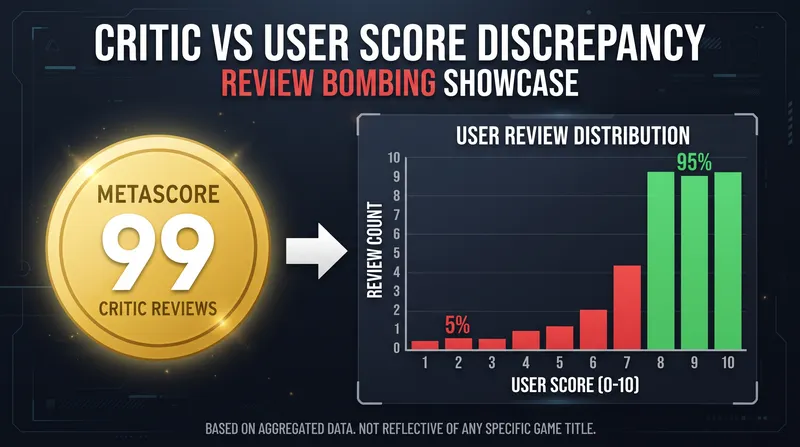
Whenever a flagship title releases, wide gaps frequently emerge between critical consensus and public aggregator scores. Following the November 2026 launch of Grand Theft Auto VI, searches for gta 6 review score discrepancy and review bomb climbed by over 1,600% after the title achieved a 99 Metascore from publications while sitting near a 4.8 to 5.0 average on open user review boards.
Much like tracking commercial launch data in our GTA 6 $3.79 billion day-one retail sales report, understanding how review aggregation systems calculate scores provides essential context for evaluating game quality.
Here is the analytical breakdown of why critic and user scores diverge, what triggers review bombing, and how verified ownership platforms measure player sentiment.
Open Aggregators vs. Verified Storefront Ratings
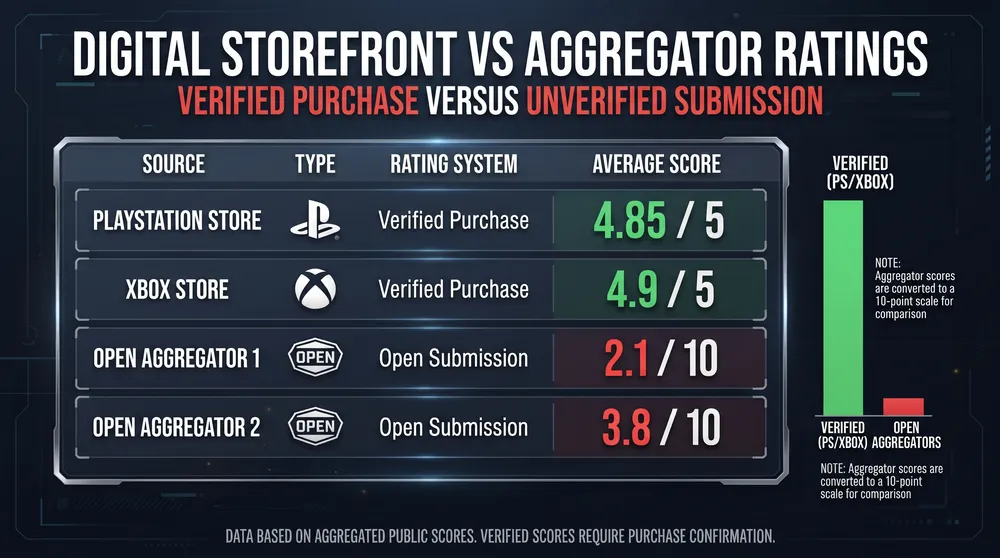
The primary driver behind extreme score gaps is ownership verification. Different platforms enforce entirely different eligibility rules before a user can submit a rating:
| Rating Platform | Ownership Verification Required? | Scoring Scale | Observed GTA 6 Score Pattern (Nov 2026) |
| Metacritic (Metascore) | Invited professional publications only | 0 to 100 (Weighted) | 99 / 100 across early critic reviews |
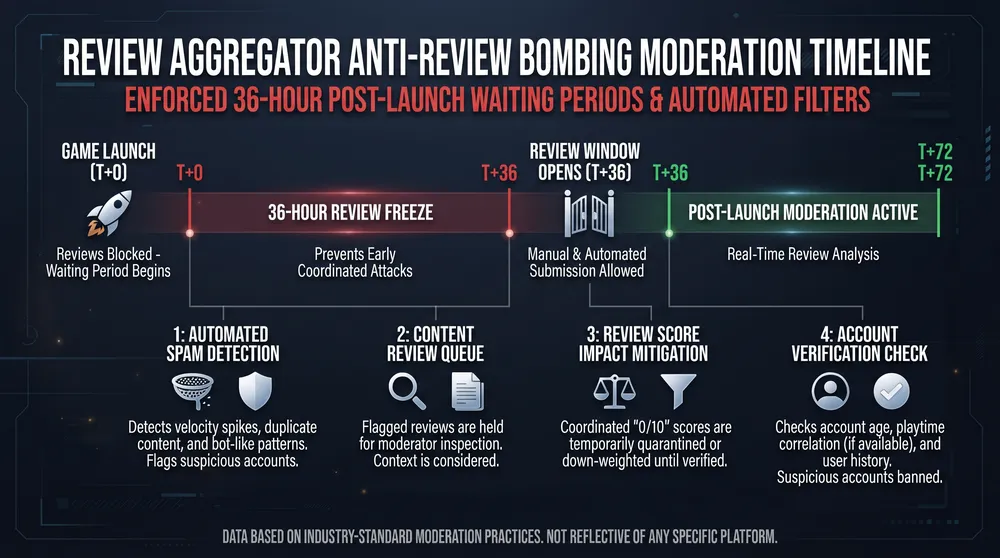
| Metacritic (User Score) | No (Requires free account + 36-hour post-launch wait) | 0 to 10 (Unweighted) | ~4.8 – 5.0 / 10 (Bimodal split of 10s and 0s) |
| PlayStation Store | Yes (Must own digital license on PSN account) | 1 to 5 Stars | 4.83 – 4.85 / 5 across 159,000+ verified ratings |
| Xbox Store | Yes (Must own digital license on Xbox account) | 1 to 5 Stars | 4.9 / 5 across 21,900+ verified ratings |
| Steam User Reviews | Yes (Requires library ownership + displays playtime) | Recommended / Not Recommended | Shows recent vs. all-time percentages and flags off-topic review spikes |
Because open web aggregators do not verify whether a reviewer owns or has booted the game, a coordinated group can submit hundreds of 0/10 scores within hours of the 36-hour embargo lifting, pulling an unweighted average down rapidly.
What Triggers Review Bombing on Major Releases?
Review bombing rarely stems from a single issue; instead, it combines legitimate technical complaints with non-gameplay protests:
-
Technical Expectations and Frame-Rate Caps: Console players expecting 60 FPS performance modes on mid-generation hardware (such as PlayStation 5 Pro) frequently penalize titles locked to 30 FPS or experiencing launch-week physics bugs.
-
Platform Exclusivity Protests: Staggered release schedules where PC players must wait a year or more after console launch regularly prompt protest 0/10 ratings from users who cannot yet play the title.
-
Narrative and Cultural Backlash: Shifts in protagonist dynamics, pacing, or thematic focus often spark coordinated online campaigns targeting story direction rather than core mechanics.
-
Counter-Review Inflation: In response to 0/10 waves, supporters frequently flood platforms with 10/10 scores to offset the average, eliminating middle-ground 7/10 or 8/10 feedback.
How to Evaluate Game Quality Accurately
To separate genuine technical flaws from coordinated score manipulation:
-
Check Verified Ownership Platforms First: Prioritize PlayStation Store, Xbox Store, or Steam ratings where every reviewer holds a verified purchase and playtime log.
-
Read Mid-Tier Reviews (6/10 to 8/10): Filter out extreme 0/10 and 10/10 entries to identify recurring, specific feedback regarding frame pacing, mission structure, and launch stability.