


The VCT Format Explained: How Teams Qualify for Masters and Valorant Champions

The tactical shooter competitive circuit has grown into one of the most structured ecosystems in global gaming. Overseen by Riot Games, valorant esports operates on a tiered calendar designed to showcase regional dominance before culminating in global championships.
Following major roster shifts, staying informed requires understanding how regular-season matches translate into international qualification.
Here is the comprehensive guide to how the Valorant Champions Tour (VCT) is structured, how teams earn Championship Points, and how the road to Champions unfolds.
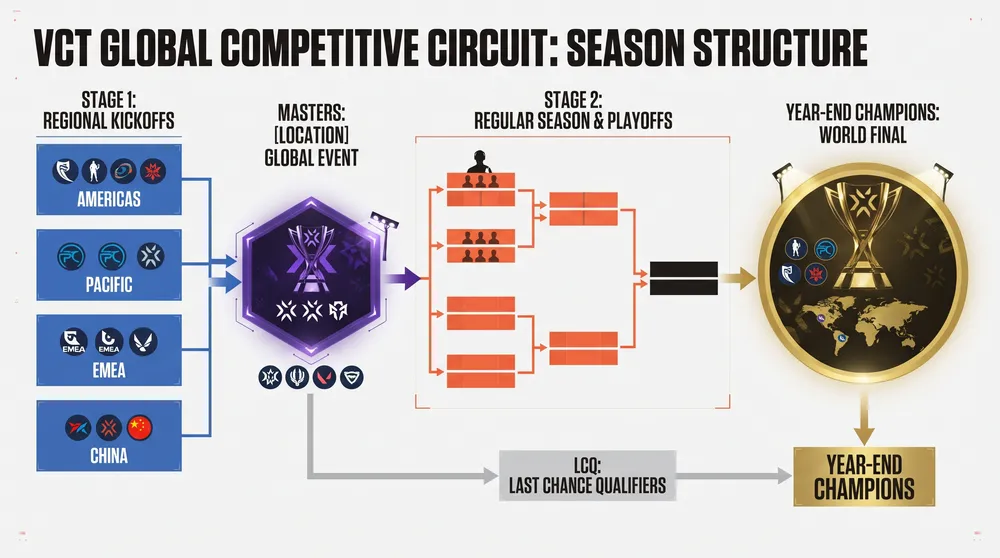
The Four International Leagues
At the core of the VCT circuit sit four partnered regional leagues, each housing twelve elite organizations:
-
VCT Americas: Competing in Los Angeles, featuring top organizations from North America, Brazil, and Latin America.
-
VCT EMEA: Competing in Berlin, covering European, Turkish, and Middle Eastern rosters.
-
VCT Pacific: Competing in Seoul, housing premier squads from South Korea, Japan, Southeast Asia, and Oceania.
-
VCT CN: Competing in Shanghai, representing China's dedicated domestic league.
Each league operates two seasonal stages (Stage 1 and Stage 2) per year, utilizing round-robin group play that feeds into double-elimination regional playoffs.

Masters vs. Champions: The Tournament Hierarchy
The competitive calendar is built around three major international checkpoints:
-
Kickoff Tournaments: Regional tournaments held in January and February to determine the opening two seeds from each territory sent to the first international Masters event.
-
Masters Events (e.g., Masters Madrid, Masters Shanghai, Masters Bangkok): Mid-season international LAN tournaments featuring the top qualifying teams from each region. Masters tournaments test cross-regional metas and award crucial circuit points.
-
Valorant Champions: The pinnacle of the season. Champions serves as the official world championship, where sixteen qualified teams compete across group stages and double-elimination brackets to crown the global champion.
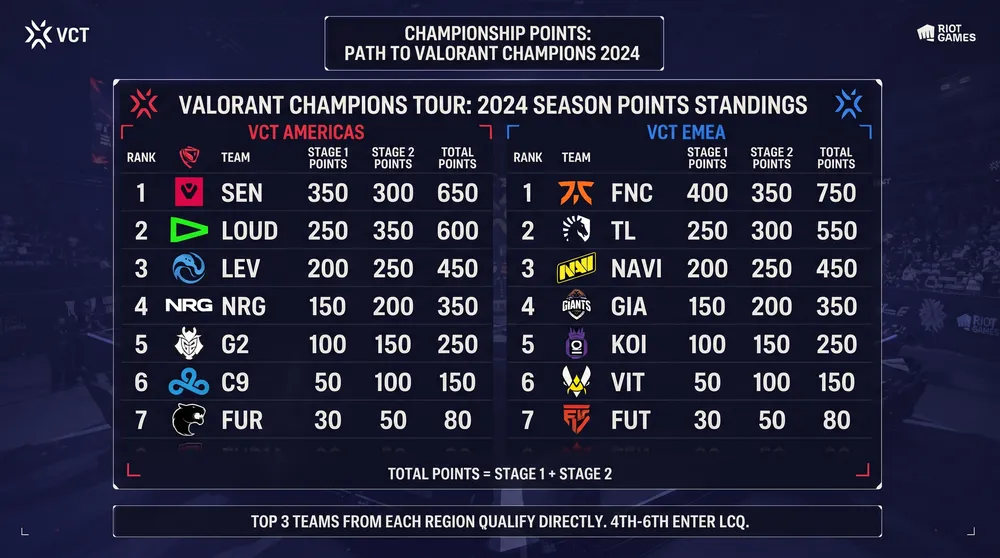
How Teams Qualify for Champions: The Dual-Track System
To reward both peak form and consistent excellence across the entire year, Riot uses a dual qualification method:
| Qualification Route | Number of Seeds | Selection Criteria |
| Stage 2 Regional Playoffs | Top 3 Teams per Region | Teams that finish 1st, 2nd, and 3rd in their respective regional Stage 2 double-elimination playoffs qualify directly. |
| Championship Points Seed | 1 Team per Region | The organization with the highest accumulated Championship Points across Kickoff, Stage 1, Stage 2, and Masters events that did not already qualify. |
Championship Points are awarded for every individual match victory during regular season league play, with bonus points distributed for winning Kickoff or Masters tournaments. This guarantees that an organization maintaining high consistency all year does not miss Champions due to a single bad best-of-three series during the Stage 2 playoffs.


