Roblox Executors and Scripts Explained: How Injection Works, Anti-Cheat Bans, and Account Risks
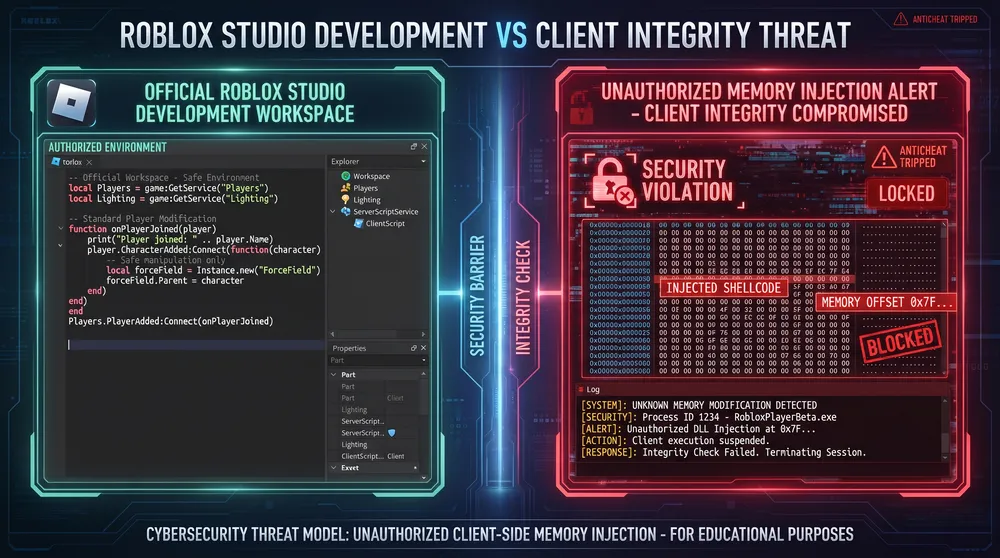
Across search trends, terms like script roblox, executor, and delta consistently rank alongside core platform queries. While many newcomers confuse third-party script executors with legitimate game development tools, running external injection software violates Roblox’s Terms of Use and exposes devices to security threats.
Building upon our foundational overview in What Is Roblox? Platform Architecture and Creator Economy Explained and our Steal a Superpower official promo codes guide, understanding how client security works protects your inventory, Robux balance, and personal data.
Here is the technical breakdown of how executors operate, how Roblox detects them, and the safer official alternatives for learning Luau scripting.
How Roblox Script Executors Work
A third-party executor (such as Windows or mobile tools like Delta) is an external program designed to attach itself to an active Roblox client process in device memory:
-
Memory Injection: Once hooked into the game client, the executor injects custom Lua / Luau code directly into the local runtime environment.
-
Client-Side Manipulation: Injected scripts typically attempt to automate repetitive farming actions, modify local player walk speed, highlight item spawns through walls (ESP), or bypass local physics checks.
-
Server Authority Limits: Because modern Roblox experiences validate currency, inventory, and damage calculations on Roblox’s cloud servers rather than the player's device, client-side scripts cannot legitimately generate free Robux or alter server-side databases.
Official Roblox Studio vs. Third-Party Executors
Players interested in coding mechanics often confuse unauthorized client injectors with Roblox’s official creation suite:
| Feature / Aspect | Official Roblox Studio | Third-Party Script Executors |
| Platform Authorization | 100% Official & Supported | Strictly Prohibited (Violates Terms of Use) |
| Scripting Language | Native Luau (Full server & client access in your own games) | Injected client-side Lua scripts inside public experiences |
| Account Ban Risk | None | High (Automated ban waves, warning strikes, and permanent account termination) |
| Malware & Credential Risk | None (Verified official installer) | Severe (Fake download mirrors and obfuscated scripts frequently bundle cookie loggers) |
Detection Systems and Security Risks
Roblox employs Hyperion (formerly Byfron), a 64-bit anti-tamper and anti-cheat architecture designed to detect memory hooks, debuggers, and unauthorized DLL or APK modifications:
-
Delayed Ban Waves: Rather than always banning accounts instantaneously, anti-tamper systems log flagged client signatures and issue enforcement waves across linked accounts and hardware identifiers.
-
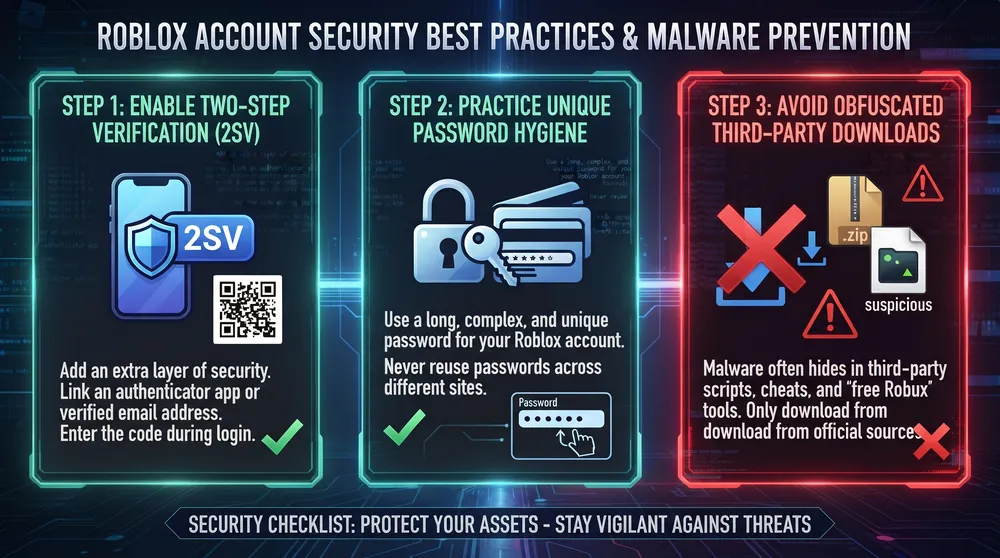
Session Cookie Theft (Malware): Because executors require disabling antivirus protections to inject code into memory, lookalike download sites and obfuscated scripts routinely steal browser
.ROBLOSECURITYsession cookies allowing attackers to bypass passwords and drain limited items or Robux. -
Never Enter Account Credentials: No legitimate scripting tool, code hub, or key system ever requires your Roblox username or password. Always enable Two-Step Verification (2SV) via an authenticator app to safeguard your account.