


What VCT 2027's New Format Could Change for Tier-Two Valorant Teams?
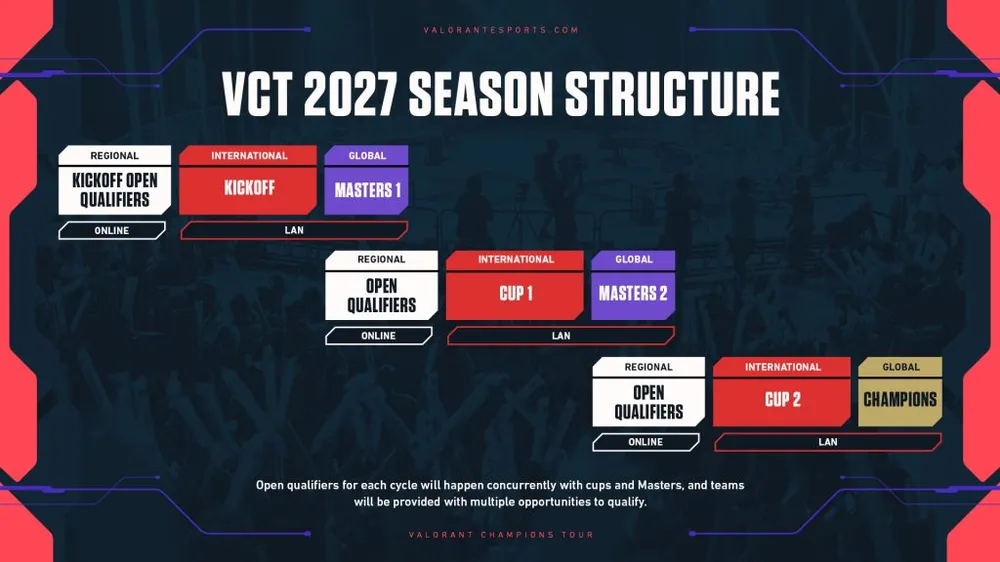
Professional eSports competitions are becoming highly lucrative, and teams contending at the highest levels are drawing large audiences and earning significant prizes. Of course, most of that loot is reserved for the tiny minority of players/teams who manage to climb the ranks and earn invitations to the most prestigious tournaments. For games such as Valorant, getting to tier-one status can be a challenging process, so it’s definitely great news that the path to the top has just been made a little easier.
The latest changes to the format of competition in the 2027 Valorant Championship Tour (VCT) are a step in the right direction that removes some obstacles that slowed down talented teams. Let’s take stock of what changed and what it means for competitors looking to reach the highest status.
Season-long Format Switched to Series of Qualifiers
Perhaps the most glaring change is the compression of action within short but intense windows. A series of tournaments and open qualifiers are replacing the league format, which took a long time to complete and made it harder for Tier-two teams to advance despite being dominant. Thanks to the existence of several qualification windows, independent teams will have multiple chances to qualify for the most prestigious events. Overall, this format is far more dynamic and also more fairly structured, rewarding the winners of single events without requiring them to endure the whole season without a drop in performance before they are allowed to compete against the elites.
Partnered Teams No Longer So Heavily Protected
In the old setup, teams enjoying the benefits of a long-term partnership agreement with Riot Games had a safety net that kept them in the loop even when their quality failed to match this status. These handpicked organizations will continue to hold permanent spots in top international leagues, but they won’t be fully protected from relegation any longer. Underperforming teams will face challengers in open playoffs, and could be replaced if they lose those matchups. Another key change is that partner teams will sign shorter, two-year contracts which means teams that don’t maintain their professional approach will be easier to weed out from elite competitions.
More Direct Path to Qualifying for Tier-One
From the perspective of an up and coming Tier-two team, the old format was slow and cumbersome. The ascension to top rank took an entire season, which feels like an eternity in the fast-paced world of eSports. That led to bizarre situations where some of the highest rated teams by every online betting sportsbook were artificially blocked from pursuing the top prizes. The introduction of regional qualifiers that send winners directly to global events like Masters and Championships fixes that bug, which is exactly what the fans clamored for. This change increases competitiveness at every level, with a stronger incentive for non-partnered teams to try and qualify in each window, and a more merit-based lineup at major events.
Financial Compensation More Directly Tied to Performance
All that we discussed above has financial implications, and one of the goals of the latest VCT reform was to spread the money out to the most deserving teams. New rules let non-partnered teams earn as much or more as if they had a contract with Riot, including a guaranteed amount based on how far they advance. This is a significant departure from the old earning structure, which was tilted heavily towards permanent teams. With a $US 6 million pool for all tiers and qualification payouts going as high as $US 400,000 for the top events, there is a lot of money on the table and all teams can get a nice piece of the pie if they outplay their rivals.


